(This article contains spoilers)
It’s finally here and as a longtime Dragon Age fan, I have to say I didn’t expect this game anymore. Dragon Age: The Veilguard came out on October 31st, 2024, 10 years after the excellent Dragon Age: Inquisition and its open ending promising chaos and misery in Thedas. We left our Inquisitor still looking for answers, Solas on the run and a world on the verge of being submerged by spirits. The veil that kept the living world safe from the Fade (and vice versa) was to be destroyed. Ten years later, the day has come but something unexpected happens: the Evanuris, the elven gods, escape from the Fade and threaten to end all life in Thedas.
Rook, the playable character, finds themselves in the middle of a new war, and the fate of Thedas is in their hands. Once again, we’ll have to save the world. Will this time be the last?
A lot happened for this game to see the light of day. BioWare lost many of its key people from the Dragon Age franchise, went through some bad times and finally, the game was done. With all these changes, is it still a Dragon Age game?
Dragon Age: The Veilguard and The Heritage of The Dragon Age Franchise
Okay, I admit it. At first, I didn’t like the character design of Dragon Age: The Veilguard that much. It looked like it was made for a younger audience, the kind of audience more prone to enjoy MOBA games than a single-player open world RPG, and it gave off the wrong vibes. Then I saw some of the world art and it helped. A lot.
It’s almost a tradition now to hate on games even before their release and the Dragon Age games are no exception. This time, some people attacked the game for its “wokeness”, because of its non-binary character with scenes they felt were pushed on them. Thing is, Dragon Age has always been “woke”, the games have always included characters from various minorities and The Veilguard is no different in that aspect. Now what could be debated is how they did it this time.
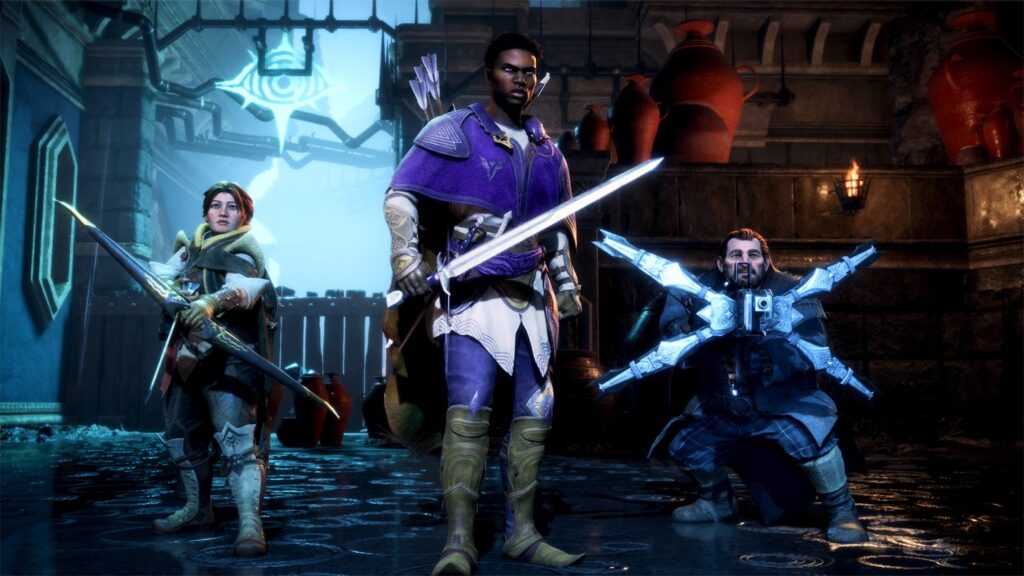
The Dragon Age games have always been crafted with care when it came to the writing. As complicated as making such big games is, especially in an industry more and more focused on profits, they always managed to keep a certain level of quality. Dragon Age: Origin is still a fan favorite, Dragon Age II stays a reference, Dragon Age: Inquisition opened the franchise to the next level and eventually, Dragon Age: The Veilguard tried to take the best of these games but lacks the soul they had.
Is the game good? Yes! It’s a good game, it’s fun to play, it’s beautiful, there’s a lot to do. But is it a great game? Well, I wouldn’t go that far. Some moments are poignant while others fall flat. As the main character, Rook is surrounded by companions who will help them throughout the game, and our main mission is, once again, to save the world.
So inclusion and diversity? Perfectly normal in a DA game. The tone, on the other hand, is different. The previous games felt a lot more adult in the way they included the player. This time, everything feels like a sort of young adult game, and it bothered me because this franchise always felt more mature. In spite of the gravity of the events, some moments and dialogues are naive, as if the game was made for young, first-time RPG players.
I really feel like the game is taking me too much by the hand in the way the companions address some issues in-game, repeating what Rook should be doing before going further into the story, sometimes several times. Companions will say out loud during a mission what the player is supposed to do or look for even before meeting any struggle, or remind you what you’re here for. If the writing of the storylines in general is good, the dialogues and some interactions with companions sometimes feel almost like a random mini tutorial even later in the game.
Discovering The World of Thedas
On the other hand, if there’s one thing the game does well, it’s the environment design. We finally get to visit more of Thedas, and especially the long-awaited Minrathous with Dock Town. More elven places with Arlathan Forest, the canals and the Crows of Antiva in Treviso, the glowing undergrounds of Tearstone Island, the wetlands of the Anderfels with Hossberg Wetlands, the beaches and dragons of the Rivain Coast and the famous Necropolis of Nevarra.
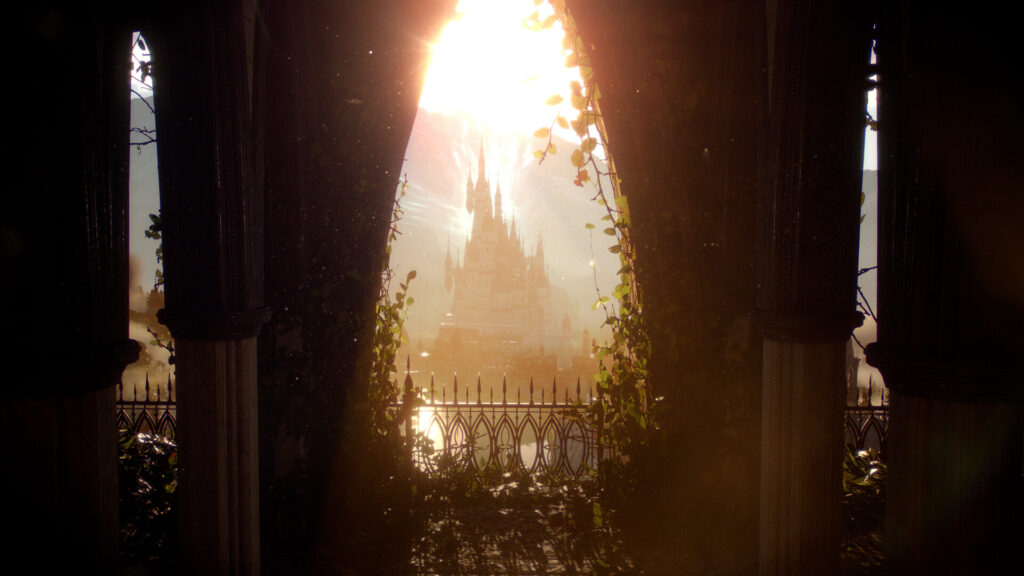
All these locations are new but also well-known to the Dragon Age fans. We’ve known these places thanks to characters, companions and events in the previous games, and getting to visit them now, with their own storylines, characters and quests, is a real highlight in the game. All these places are gorgeous, with a strong identity. Each of them have their own stakes and Rook will help their companion with local quests. There’s a lot to do, see, and discover and the lore becomes even bigger.
The Companions: New Friends, New Romances
If Dragon Age: The Veilguard brings back some famous characters from previous games, companions or NPCs, it also introduces a new set of companions, including one we’ve known since Dragon Age: Inquisition.
Among the new companions, we meet the warriors Davrin and Taash, the rogue Lucanis Dellamorte and the mages Bellara Lutare, Emmrich Volkarin and Neve Gallus. Lace Harding is a returning character, NPC turned companion. Each of them has their own storyline and personal quests, and their own romance with Rook. Opinions are divided when it comes to romance in this game. I finished the game twice, and romanced Lucanis then Emmerich (with a non-binary character first, then a male character).
Without ranking these two romances, I have to say Emmerich’s story is very compelling. Not only does the character have more layers than expected, but his story is very rich and quite different. As a necromancer, his relationship with death has an unexpected origin and really makes him stand out. Not that the other companions don’t have their own appeal, but Emmrich really is different.
Each of them has their own perks and expands the world of Thedas. We finally meet the famous Crows of Antiva through Lucanis, a mage killer also called “The Demon of Vyrantium”. Davrin is a Grey Warden and comes with a griffon, which is a big deal in the DA universe. He’s supposed to train the young beast, but their beginnings are still awkward. Taash is a Qunari who settled in Rivain with their mother. Their ability to spit fire is quite unique, and they specialize in dragon hunting. Bellara is a Veil Jumper from Arlathan. Veil Jumpers are explorers who try to understand the anomalies scattered throughout Arlathan. Neve is from Minrathous, and more especially from Dock Town, a modest city. She’s a detective and works with the Shadow Dragons who fight corruption in Minrathous. Emmerich is from the infamous Nevara. He’s a Mortalitasi (necromancer), member of the Mourn watch, the keepers of the Grand Necropolis, and is accompanied by a walking skeleton named Manfred. And finally, Harding makes her comeback, this time as a companion. The scout we loved to meet in Inquisition is now part of the main action.
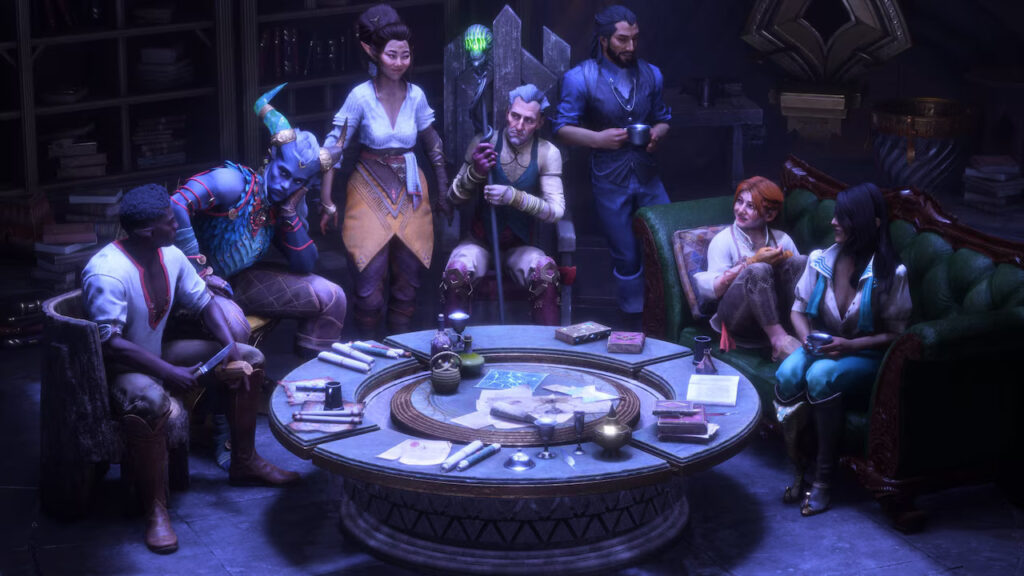
Companions are at the heart of Dragon Age, they’re part of the essence of the game. If the previous games managed to hit the mark with their own characters, this time things feel less deep, maybe a bit less engaging. They all have long personal storylines, with multiple quests weaving themselves between the world and the main story, but something is missing, and the writing lacks heart.
Of course, everyone has their favorites for various reasons. I came to really enjoy taking Bellara in my team. Paired with Emmrich, their banter is always full of shared knowledge and wonder. But the one I really loved from the beginning to the end was Emmrich, and he wasn’t even really on my radar before playing. The writing of Emmrich is wonderful, rich and complex, a nuanced character, a patient scholar who always tries his best to support everyone, encourage them and have positive words for them.
Davrin was a bit of a disappointment. The character in itself is great, the difficulties he faces with raising a young griffon lead to some wholesome moments, and his affiliation with the Grey Wardens comes with a sense of duty he has to rethink at times. But I’m really having a hard time with this trend of making black characters into law enforcers/military, even if he ends up following his own decisions in spite of the orders he receives.
Taash is also another disappointment. Don’t get me wrong, I love having a non-binary character in a game, but the way the writing treated them made them a disservice. They sound like an angry teenager (which they could actually be, I’m not sure their age is known), and while them questioning their identity is a nice thing to have in a game, the way it’s been written is honestly very immature.
Taash is looking for their own self while being insufferable at times with their lack of maturity. It’s already a challenge to have a non-binary character in a game without facing some backlash, so why choose to give this storyline to a character that is also immature? This storyline wasn’t handled in the best way and some moments with other characters are also strange in regard to that topic.
And there’s Varric.
The companions are one of the things I enjoy the most in a Dragon Age game and in this one, I feel like the various production issues are showing. Oh well, at least we met Dorian again!
An uneven game
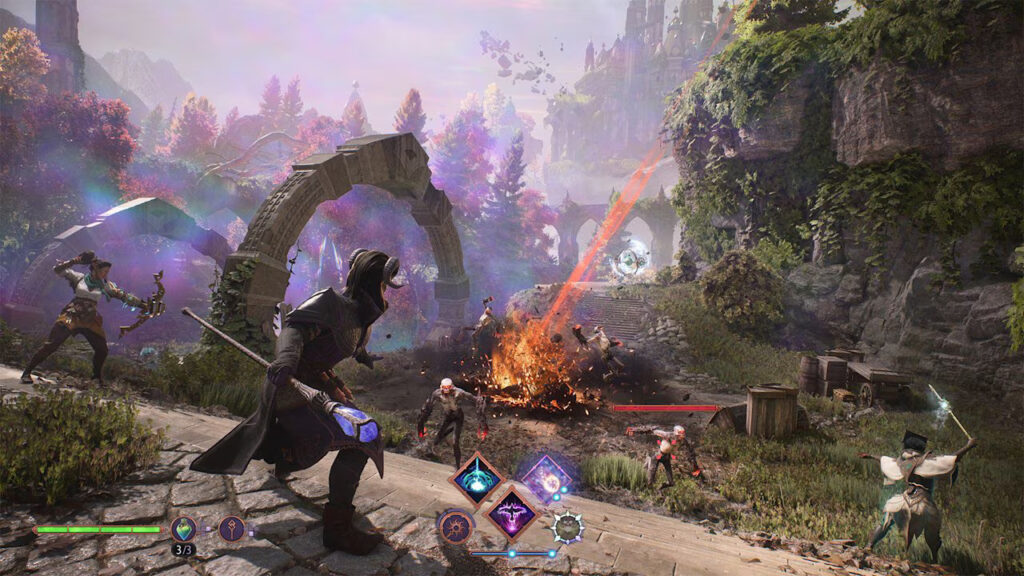
The combat system doesn’t have anything remarkable, it’s new without being groundbreaking, it’s fun enough to enjoy fighting, the weapons can be used by characters of a same class, so it’s interesting to play with various specs, but nothing really stands out. As a mage lover, I rolled two mages. I tried the rogue class but didn’t have fun with it, and did more damage with a mage at the same level. Early in the game, upgrades and enchantments are available. It gives good perks to Rook’s weapons, armor and accessories, but also to all the companions’.
There are a lot of small things that make the game entertaining, but again, the way it’s written feels like it has been made for a new public. The fact that we can’t import our data from the Dragon Age Keep felt like our past adventures were completely dismissed. In place of that, we can “import” three choices from our time spent on Inquisition: who our Inquisitor romanced, whether we disbanded the Inquisition or not, and what we chose to do with Solas (stop or save him).
We also had to (re)create the Inquisitor as they play a part in The Veilguard. And maybe it should be enough, but frankly, it’s not. It really feels like the game is disconnected from the previous ones, even with the many returning characters, even with the ultimate goal inherited from Inquisition.
On the other hand, the lore grows with this game. We learn and see many new things that expand the world of the Dragon Age games, and it was about time. Problem is, while it’s a delight to visit all these places and meet all these people, something is still lacking, and like some other long franchise, it feels like the heart of what made the original game got lost along the way. Yes, then years is a long time to make a game, and The Veilguard went through too many changes along the way. Maybe losing its essence was inevitable.
Dragon Age: The Veilguard won’t leave the same mark as its predecessor but can be a good first Dragon Age game for gamers who are not familiar with the franchise, maybe the younger ones. The conclusion of the story depends on the choices we make at the end with Solas, but without a fifth installment, it could be a real full stop for this adventure. Now, nothing’s set in stone as a “secret ending” reveals mysterious figures that have been working in the shadows since… Dragon Age: Origin. This could be the start of a whole new arc in the Dragon Age universe, but I’m not holding my breath. See you in ten years!
Dragon Age: The Veilguard is available on PlayStation 5, Xbox Series X and Series S, GeForce Now and Microsoft Windows.