(This article contains spoilers)
From books to television, adaptations have been more or less popular, ranging from vaguely inspired to easy cash grabs, and some honest works. But when it comes to queer stories, adaptations are not only rare but also tricky to do. Heated Rivalry could have easily missed the mark, it could have made use of the infamous “rainbow capitalism” to make its success, and yet, it did none of that. Instead, Jacob Tierney, its creator and director, crafted a beautiful story of love, doubts, fear, and hope, making the show a historical landmark in TV, and queer TV.
Adapted from the book series Game Changers by Canadian author Rachel Reid, Heated Rivalry — second book of the series — tells the story of closeted hockey players who go through several stages of lust and love behind closed doors. If the story is simple, there is a lot to explore.
The books are gay romance with smut, a popular genre in certain circles, especially those dominated by women. If, like me, you are a regular in fandoms and the world of amateur fiction, and fanfiction, nothing here will surprise you. Women have been writing male gay smut for ages, and have been doing it very well on many occasions.
These stories can go from long form explicit romance to short stories consisting of only smut. There’s no rule, only the pleasure of writing smut featuring the author’s favorite characters, in the case of fanfiction. Heated Rivalry is one of those long stories that weave gay sex and feelings, with a contextual background that keeps everything together.
The show has been described as “soft porn”, which is pretty accurate considering the amount of almost explicit sex scenes, but it’s actually more than that. Yes, sex is at the center of the story. Or is it? There’s a lot to unpack here, because if sex, and in this case gay sex, is very prominent and crucial to the story, this is not what the story is about. The background story, the canvas, is about the life of closeted hockey players, and the way they navigate their love and sex life hidden from the world, while being top athletes in a sport that is not known for its support of queerness.
Between Gay Romance and Societal Commentary
But first, an important disclaimer: I haven’t read all the books. I actually recently started the book series, but I can’t really make any significant parallel between the second book, Heated Rivalry, and the adaptation. Thanks to a very lively fanbase, I know some of the things that happen in the books, I also know the readers are pleased with the TV show, but I won’t use that knowledge to talk about the show as it’s often out of context.
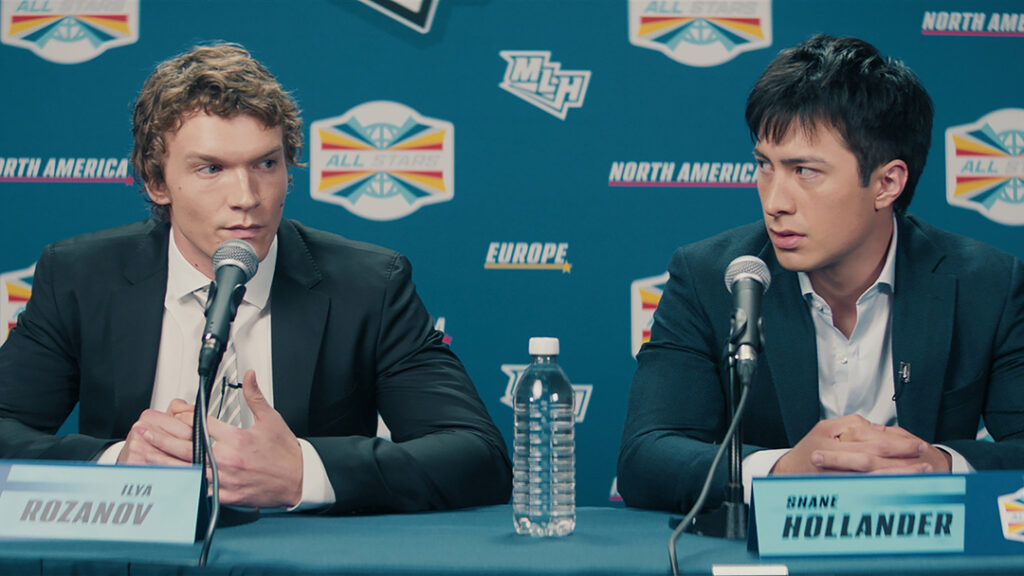
The first episode starts by introducing two young promising hockey players from the NHL (National Hockey League): Ilya Rozanov (Connor Storrie), playing for Russia, and Shane Hollander (Hudson Williams), playing for Canada. From the get-go, we have our rivals, as the show opens with them meeting before a game.
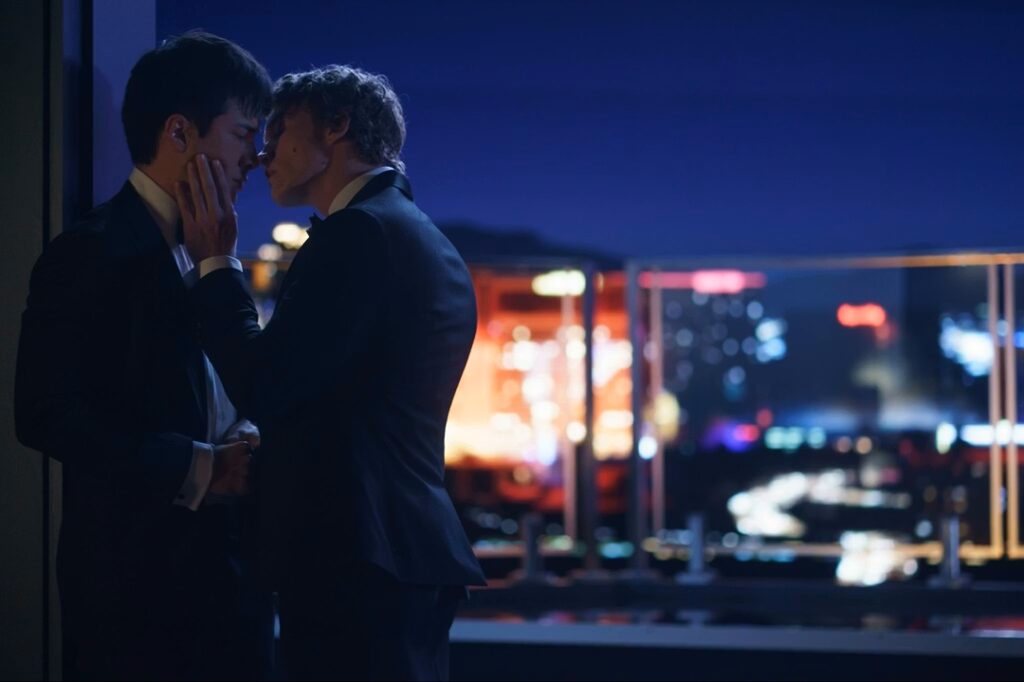
No time is spent on introducing them separately, it’s about Rozanov and Hollander right from the first scene. After an awkward first meeting, it’s clear the two are attracted to each other. Their relationship, which starts as a situationship, evolves over the course of months that turn into years. First kiss, first sex, the yearning, the nonchalance, the questioning, we follow all the stages of what brings them together, but also keeps them apart.

In this story, hockey is a pretext for portraying two athletes who should be polar opposites sharing a relationship. Ilya and Shane are two very different characters. They shouldn’t get along, communication is strenuous, and it’s only when they have sex that they seem to understand each other. As expected in this kind of story (and especially after reading fanfics for more than two decades), it’s clear Ilya and Shane are actually very fond of each other, but their respective lives make their relationship complicated, if not impossible.
Heated Rivalry, and the Game Changers book series, tackle a seemingly taboo subject: queerness in the NHL, and in sports in general, especially team sports.
And this is where Heated Rivalry shines the most. Yes, of course, the sex scenes are great, they’re beautifully shot, Connor Storrie and Hudson Williams give and show a lot of themselves, the chemistry is through the roof, but the context is what makes the story different. It’s not just sexual, the sex is actually the easy part of the story.
The show is a real societal commentary. Since its creation in 1917, not a single player of the NHL has come out as gay or bi. Not one. Which means currently, among more than 700 players, not a single one is officially queer. What are the odds, right? Heated Rivalry, and the Game Changers book series, might be “gay smut for women” (and this topic would deserve its own article, or even several), they tackle a seemingly taboo subject: queerness in the NHL, and in sports in general, especially team sports.

The Original Game Changers
After two intense episodes with Rozanov and Hollander, the show focuses on two different characters, Scott Hunter (François Arnaud), one of the best players in the NHL, and Kip Grady (Robbie G.K.), a smoothie bar clerk. Yes, the show adapted a “coffee shop AU” of sorts! These two characters are actually the ones who kick-started the Game Changers series. They are the game changers. Their episode highlights the secrecy of having a queer relationship in this sport, but also what could be lost if Scott were to come out.
It’s not just about coming out, it’s coming out while being at the top of a sport that has never been supportive of its potentially queer players. In real life, if the players have shown support to the LGBTQ+ community, the organization itself has always been unsupportive, and quite frankly against, any form of queerness. Unfortunately for Scott and Kip, this will cost them their relationship in this episode, Scott not wanting to compromise years of hard work and his responsibilities.
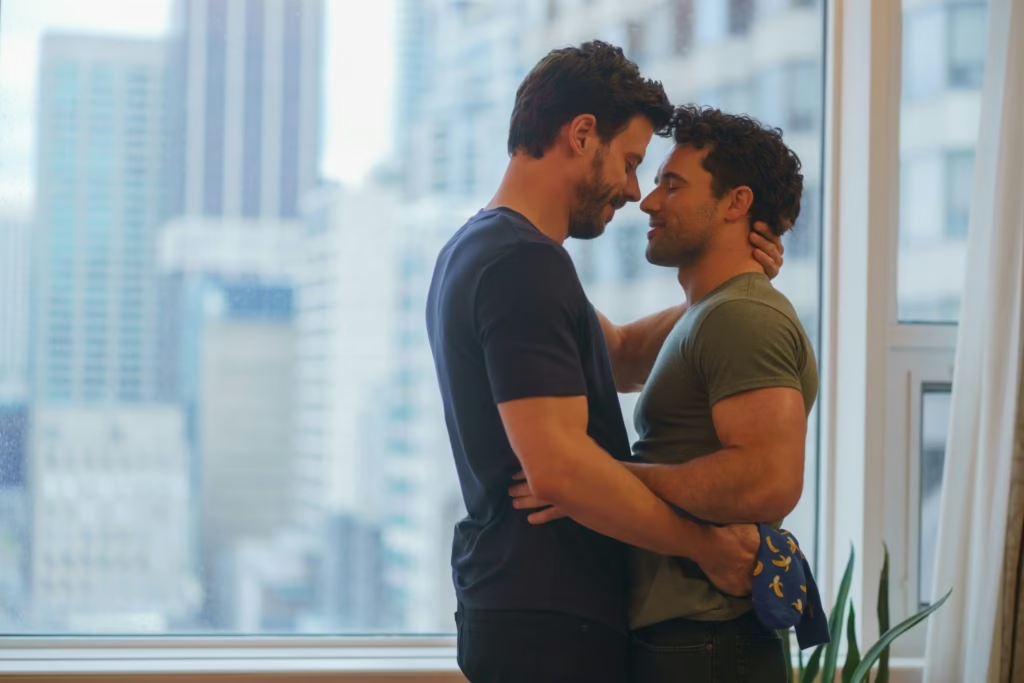
As the show progresses, and with only 6 episodes, Rozanov and Hollander unravel the fabric of their relationship to expose its core, where it hurts. The passion turns into masked jealousy, and they reach their breaking point. Sex is not enough anymore, hasn’t been for a while, and they manage to talk about their feelings, though indirectly.
The real turning point comes when Scott comes out very publicly in a beautiful scene at the end of Episode 5, I’ll Believe in Anything, on the ice, as his team just won the Stanley Cup. His teammates are celebrating the victory with their family on the rink, but Scott is alone. And this is when he makes the decision of a lifetime: his eyes find Kip in the audience, and he calls him over. That moment is witnessed by Shane and Ilya on TV, which results in Ilya accepting to spend some time at Shane’s cottage during their summer break, something he previously refused for fear of being found out.
As the show progresses, and with only 6 episodes, Rozanov and Hollander unravel the fabric of their relationship to expose its core, where it hurts.
In the books, a few months passed between the breakup and Scott’s coming out, but the show extended this period to 3 years so Scott and Kip’s timeline could match Shane and Ilya’s. It’s quite confusing to see Kip there, acting like they just broke up, but also allows 3 years’ worth of story to be told, or imagined. Fanfic writers know.
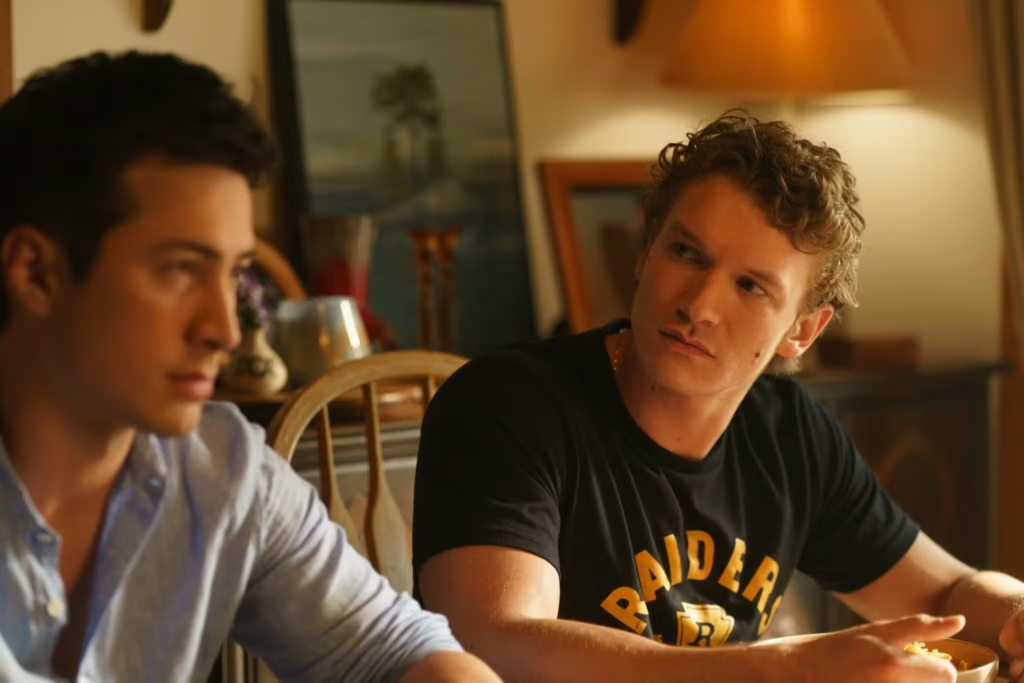
After Scott and Kip’s story finds a happy milestone, it’s Shane and Ilya’s turn to put an end to their endless dance, and be honest with one another. The last episode, The Cottage, opens with a powerful speech given by Scott as he receives the Most Valuable Player award. This speech is a direct commentary about hockey culture, homophobia, and how accepting people for who they are can change lives for the better. François Arnaud shines in this role, his delivery always so just and emotional.
In a world where minorities are more and more the target of its leaders, where queer people are losing their rights, queer joy on TV almost feels like an act of resistance.
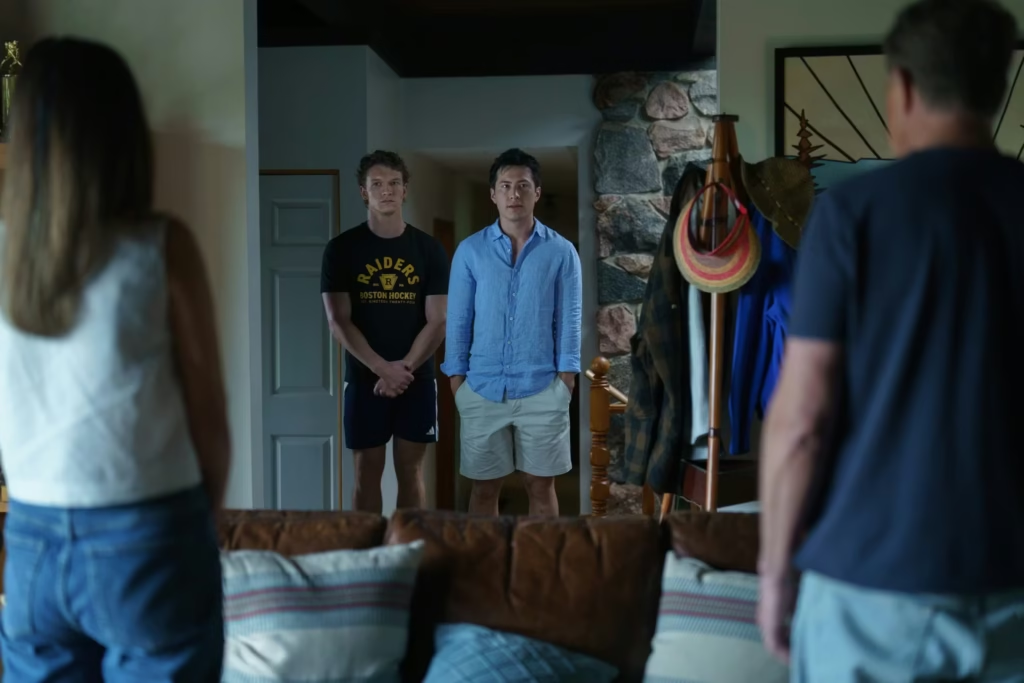
At the cottage, Shane and Ilya agree to tell each other what they really think and feel, no more secrets, no more hiding. They both already knew without knowing, a situationship doesn’t become so tense if feelings don’t evolve, and theirs was very tense. This episode is also when Shane comes out to his parents after his father finds out by accident they’re spending the summer break together. And while fear and doubts are inevitable for Shane, Heated Rivalry is, indeed, about queer joy, as Jacob Tierney told himself. It’s about the positive things that happen to queer people, eventually.
Exit the “bury your gay” trope and other sad breakups with no positive ending. Shane’s parents accept his true self, even accept his relationship with Ilya. In a world where minorities are more and more the target of its leaders, where queer people are losing their rights, queer joy on TV almost feels like an act of resistance.
Now, the story is not over as Shane and Ilya didn’t come out publicly. Coming out to Shane’s parents was a meaningful milestone, but they’re still very much closeted to the rest of the world, and the NHL. Any change could ruin their career.
The Women of Heated Rivalry
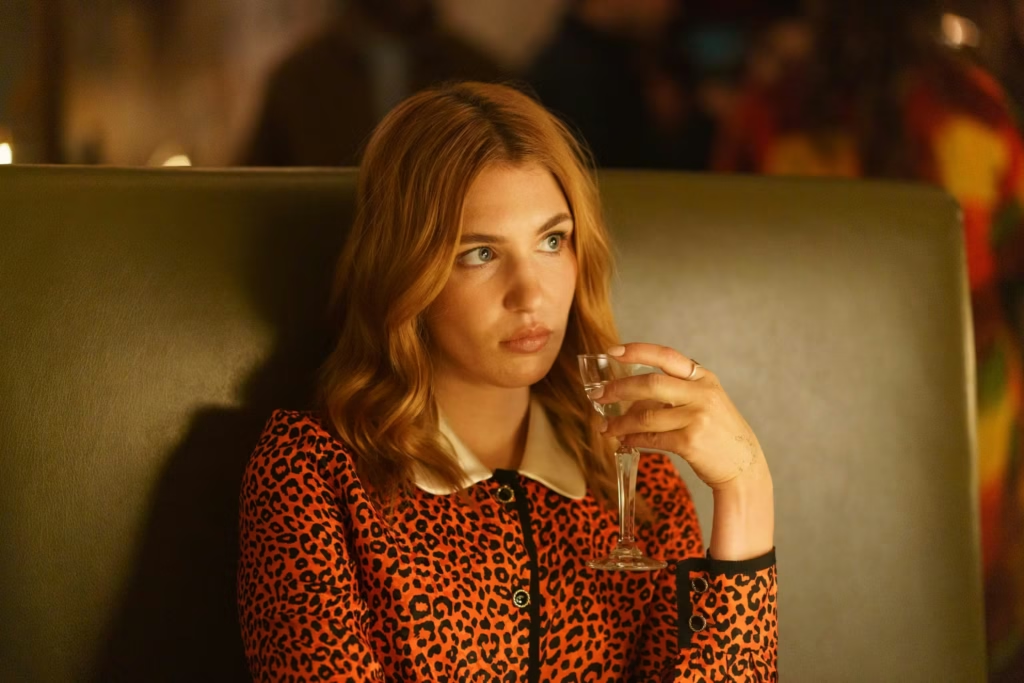
Is Heated Rivalry all about queer men? No, it’s also about allies, especially meaningful women in these men’s lives. Ilya shares a friends with benefits relationship with Svetlana (Ksenia Daniela Kharlamova), a relationship clearly built on love and respect. The boundaries are clear, the lines are never crossed, even when Svetlana reveals to Ilya she knows about him and Shane. No jealousy, no bitterness. It’s refreshing.
On Shane’s side, it’s a bit more complicated. His relationship with Rose Landry (Sophie Nélisse), a popular actress he met in a bar, could have ended in a catastrophic way when she realized she wasn’t “doing it” for him. Instead of being hurt (and honestly, she could have been a bit angry), she chose to support him and help him embrace his true self.
Kip is the one with the strongest and most diverse support system. We see him with several friends, queer friends too, with a supportive coworker, Maria (Bianca Nugara), and most importantly, with a loving father (Matt Gordon). Everyone knows he’s gay, everyone loves him for who he is. His best friend Elena (Nadine Bhabha) encourages him to go after Scott, and she’s also the one to support Scott in choosing happiness for himself. What a thoughtful queen.
Only Scott is without any support system, no close friends to confide in, no family anymore. But being with Kip now means having a new family that embraces him fully, starting with Elena, who never antagonized him for pulling Kip back into the closet, and telling him he also deserved to be happy.

There’s a lot to be said about women, queer or not, in the lives of queer men. In the show, even Shane’s mother, Yuna (Christina Chang) ends up being supportive of her son. Her focus on his career might be strong, she’s a loving mother nonetheless. There is no hate, no jealousy, no bitterness. No unnecessary drama to make women look hysterical or mean. This is a show about love, and they chose to show the love of these women for the queer men in their lives instead of pitting them against each other. Classy, tasteful, we need more of that.
By extension, the “women of Heated Rivalry” are also the original writer, Rachel Reid, the thousands of readers, and all the women who’ve been writing gay smut for decades. Stories like this one are legion in fandoms and amateur original fiction. A lot of this culture is online, which can make it look disconnected from the real world, the world of real gay men, and yes, sometimes it is. But as Jacob said in an interview with The Hollywood Reporter: “We as queer people need to check our messaging. […] The things that we decide women can or can’t do can be really exhausting. Women are allowed to write about men. They’re allowed to write about gay men. The question should be, how are they writing about us? Is it with empathy? Is it with allyship? Is it with kindness? Why are we looking for enemies here instead of looking for allies?”

We as queer people need to check our messaging. […] The things that we decide women can or can’t do can be really exhausting.
Jacob Tierney
The Real-Life Game Changers
Now, let’s talk about who made the show, and their commitment to crafting this compelling story for the screen. Creator and director Jacob Tierney made a bold choice by choosing to tell this story, but more importantly, by choosing to stay true to its nature. Game Changers is gay smut, there is no other reading. These books are about gay love stories and sex. Tierney could have chosen to soften it, to make it more “palatable” for the public, so the show could reach a wider audience, people who wouldn’t necessarily watch a “gay show”, but who could be willing to watch it as a sports show with a gay romance.
This is not what Heated Rivalry is, and Tierney stood his ground when he was asked to make changes to the story, like adding a “female entry point” or even stretching the main storyline to make Shane and Ilya only hook up in a potential Season 2, as he told Slate in an interview.

The cast is also mostly made of smaller names in the industry. Hudson Williams and Connor Storrie don’t have a lot of credits to their name. As a matter of fact, they had to quit their serving jobs to take these roles. And they did a terrific job at becoming Shane and Ilya, also thanks to the masterful characterization by Jacob. They are Shane and Ilya. The tone is perfect, the chemistry is unbelievable, and the respect for the original work and Jacob’s adaptation is obvious. They love the characters and the story, and it shows.
Their co-star, François Arnaud, is also another highlight of the show, along with Robbie G.K. Arnaud really became an international name for his role as Cesare Borgia in the show The Borgias, and has been acting for almost 20 years now. Other bigger actors such as Sophie Nélisse, Christina Chang, and Dylan Walsh believed in this unique, and quite frankly daring, project, giving the show a bigger dimension.

Heated Rivalry could have been a small show only relevant for queer people and a few women, but it became a real international phenomenon. The love across the world, across the communities, is astounding. Making a hit TV show wasn’t the goal, but what Jacob Tierney and the entire team achieved could become a new standard: smaller shows, made with love for the story and respect for its target audience, do work when the right people are involved.
A second season is expected for 2027, also on Crave in Canada, and HBO in other countries. And we can’t wait.